Ultra-High Elasticity
With an ultra-high 391% elongation at break, EL400 combines rubber-like elasticity and hardness, offering excellent flexibility and stability to realize your innovative designs.

Models printed with EL400 exhibit superior reliability. Withstanding over 60,000 cycles at 23°C with a tear strength of 39.1kN/m*, it unlocks new opportunities for elastomer creations.
With an ultra-high 391% elongation at break, EL400 combines rubber-like elasticity and hardness, offering excellent flexibility and stability to realize your innovative designs.
The EL400’s 50–55% Bayshore rebound rate* makes returning to its original shape after deformation seamless. Ideal for durable prototypes for long-term testing and repeated use.
Perfect for products with high-durability needs, such as bicycle seats and shoe cushions, it maintains optimum performance under repeated bending and tearing conditions, ensuring long-term use and reliability.
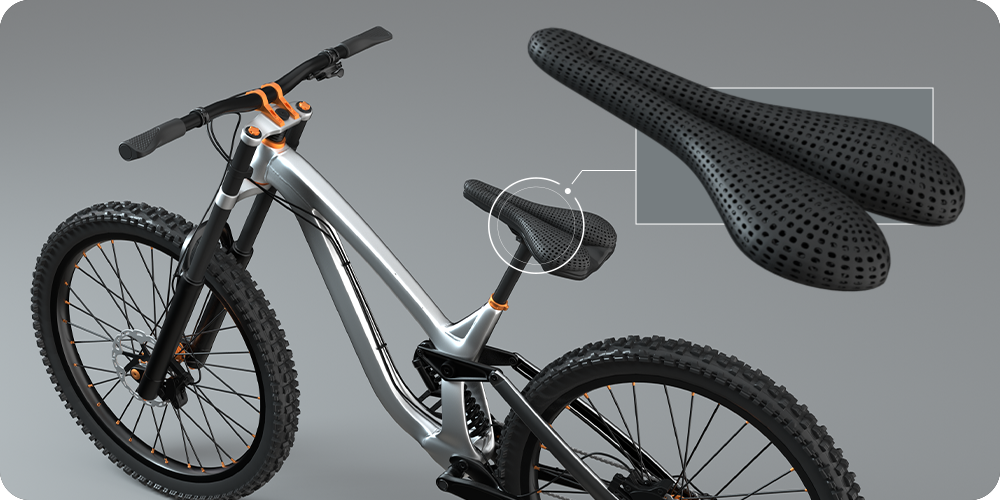
Developed as high-performance material with excellent elasticity and tear-resistant properties, models printed with EL400 are suitable even for industrial processes, resulting in an ideal material alternative to foam and TPU. *The data provided is the performance results of a fully post-processed object. For complete post-processing methods, please refer to the user guide below.


Wash in 95% ethanol using Phrozen Washing Station until its thoroughly cleaned (don’t soak for a prolonged period to avoid surface damage), then place in a cool, ventilated area away from sunlight until it dries, or use the drying function in the Phrozen Curing Station.
Soak the models in glycerin and post-cure for about 60 minutes. Once completed, remove from glycerin immediately and clean up the models with water. Leave models in a cool, well-ventilated place for at least 60 minutes without exposure to light to dry.
Rinse the model with clean water until it’s thoroughly cleaned and dry in a cool, ventilated area away from sunlight for 60 minutes until the model dries completely. If required, an additional thermal post-cure at 80°C for 2 hours can be performed to enhance the mechanical properties of the models.
*Unless otherwise specified, all samples are the performance of printed parts. The information in this Technical Data Sheet (TDS), including all information and product recommendations, is based on our current knowledge and experience. Changes to descriptions, images, photographs, data, proportions, weights, etc., might occur without notice and do not constitute a contractual quality of the product. If required, please request Material Safety Data Sheets (MSDS) from your supplier or contact Phrozen Tech Co., Ltd.