Client Introduction
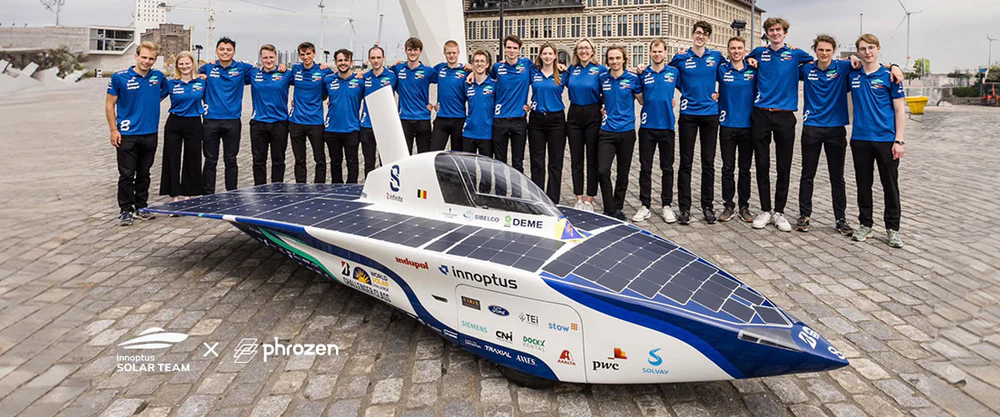
The Innoptus Solar Team, a distinguished student-led group from KU Leuven University in Belgium, was known for pushing boundaries in solar-powered automotive design. This team participated in the prestigious Bridgestone World Solar Challenge, a grueling 3,000-kilometer, 5-day race through the Australian desert, from Darwin to Adelaide. Competing in one of the world’s most demanding solar car races, the Innoptus team faced extreme conditions that required them to maximize battery power while optimizing vehicle speed and aerodynamics.
To rise to the challenge, the team rebuilt their solar car every two years, striving for efficiency and innovation in every new model. For their 2023 entry, named Infinite, the team introduced advanced features, such as an active wheel closure system and a retractable fin, designed to improve stability and energy efficiency. However, developing these complex systems demanded rapid design iterations and precise prototyping—an area where the team turned to 3D printing to stay ahead of the competition.
Starting in 2023, the Innoptus Solar Team adopted Phrozen’s Sonic Mega 8K 3D printer and specialized resins (TR300, Protowhite) to streamline their development process. This advanced 3D printing technology enabled the team to quickly prototype parts, refine designs, and maintain flexibility in adjustments, ultimately contributing to their victory in the 2023 World Solar Challenge.
Challenge #1: Active Wheel Fearing (Revised)
To optimize both speed and battery efficiency, the Innoptus Solar Team faced a unique engineering challenge: designing a dynamic side panel, or "wheel fearing," that would open just enough to prevent tire contact with the car’s shell while minimizing wind resistance. A narrow opening risked the tires scraping the shell, while a wider one increased wind drag, which would lead to greater battery consumption. Balancing these needs required rapid prototyping and testing to identify the ideal design.
Solution with 3D Printing
The Innoptus team turned to 3D printing to speed up their design and testing cycle for the wheel fearing. Traditionally, they relied on CNC machining or external vendors for such components—a time-consuming and costly approach due to minimum order requirements and prolonged communication with third-party suppliers.
However, with the Phrozen Sonic Mega 8K 3D printer and Protowhite resin, the team could create durable prototypes in-house within hours, allowing for fast, affordable iterations on their designs. This setup enabled them to explore a variety of internal mechanisms and optimize the opening system to achieve maximum aerodynamic efficiency.
Results
- Turnaround Time. The team reduced the production time for new prototypes from days to hours, allowing them to rapidly iterate and improve the design.
- Precision and Fit. The smooth finish of the Protowhite resin minimized the need for post-processing, while its strength allowed for robust testing without relying on third-party fabrication.
- Enhanced Efficiency. By achieving a finely tuned wheel-fearing system that reduced wind resistance, the team reduced drag and extended battery life, enabling the solar car to maintain optimal speeds over long distances.
Through the fast, precise, and cost-effective advantages of 3D printing, the Innoptus Solar Team could focus more on real-world testing and refining their design—a vital factor that contributed to their winning performance in the 2023 World Solar Challenge.


Challenge #2: Moving & Rotating Fin System (Revised)
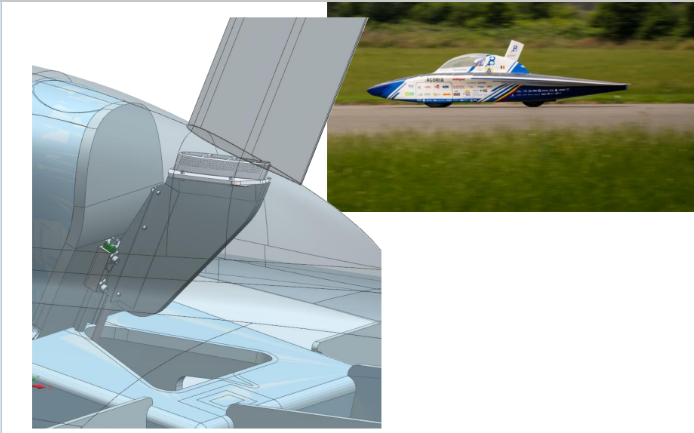
To ensure stability and enhance energy efficiency, the Innoptus Solar Team developed a fin system designed to rotate and move up and down. This system would help the vehicle stay stable in strong winds while providing additional thrust in the driving direction. However, the team faced a challenge: they needed a lightweight, durable, and precisely controlled internal mechanism for the fin, and they had to test and refine this design rapidly and affordably to find the best configuration.
Solution with 3D Printing
Leveraging the Phrozen Sonic Mega 8K 3D printer and Protowhite resin, the team could produce fin prototypes quickly and cost-effectively, enabling fast iterations to refine the fin’s performance. Compared to traditional CNC and milling methods—which require third-party vendors, minimum order quantities, and longer turnaround times—the in-house 3D printing solution saved significant time and money. This allowed the team to focus more on actual testing and performance enhancements, rather than waiting on external suppliers.
Results
- Time Savings. Reduced prototype production time from days or even weeks to hours, enabling immediate testing and improvements.
- Cost Efficiency. Avoided the high costs and constraints of traditional manufacturing methods, allowing more design freedom and frequent iterations.
- Performance Optimization. The optimized fin provided better wind resistance management, boosting both stability and energy efficiency for a more controlled, longer drive.
With the flexibility and speed of 3D printing, the team could focus on perfecting the fin system to reduce wind resistance—a critical factor in optimizing battery power and overall vehicle performance.
Challenge #3: Battery Cell Casing
Before the large-scale production of battery modules, the team needed to ensure that the battery casing design fit seamlessly with other components of the vehicle. It was essential to test the layout and make design adjustments if needed.
Solution with 3D Printing
The team used 3D printing to create dummy battery casings for testing. This allowed them to detect potential design errors or fit issues before committing to full production. Using Protowhite resin, they could precisely replicate the final part’s size and structure, minimizing risk.
Results
Risk Mitigation. Early 3D-printed prototypes helped identify design flaws, avoiding costly production mistakes.
Time Savings. The design-testing process was expedited, ensuring the final product was ready for production without delay.
Challenge #4: Mold of Carbon Fiber Steering Wheel Cover
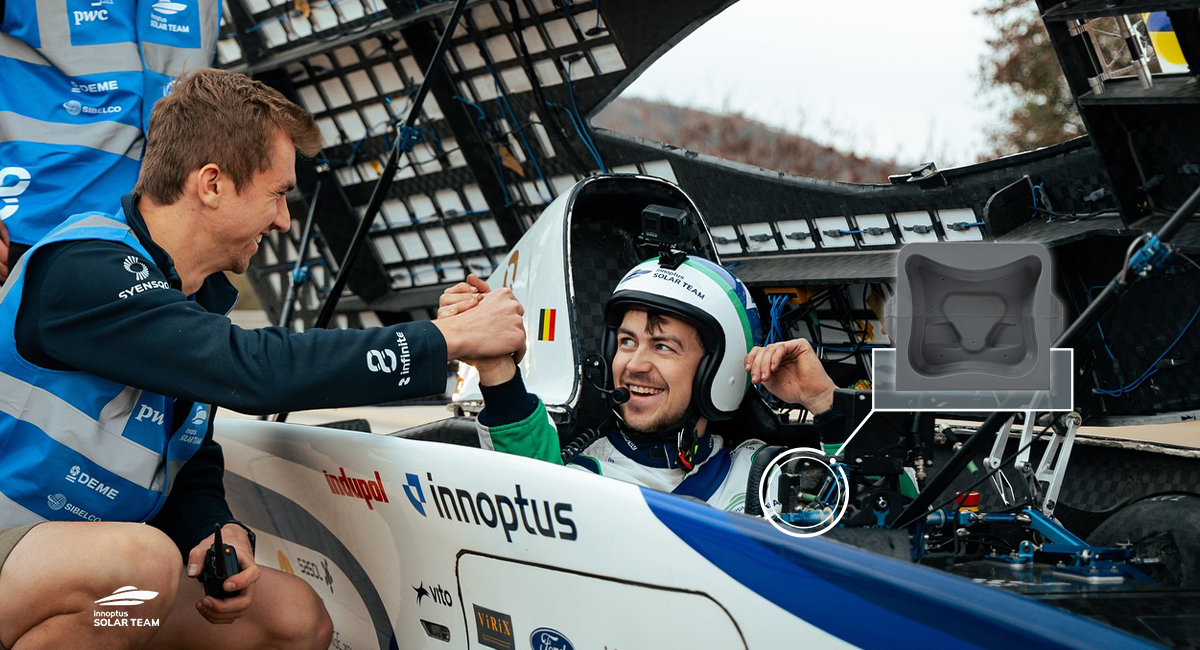
To produce small carbon fiber parts, such as the steering wheel cover—a crucial component in the vehicle’s control system—the Innoptus Solar Team required a mold that could withstand high temperatures during the carbon fiber curing process. Traditional methods of creating such molds are typically expensive and time-intensive, involving external vendors and extensive post-processing.
Solution with 3D Printing
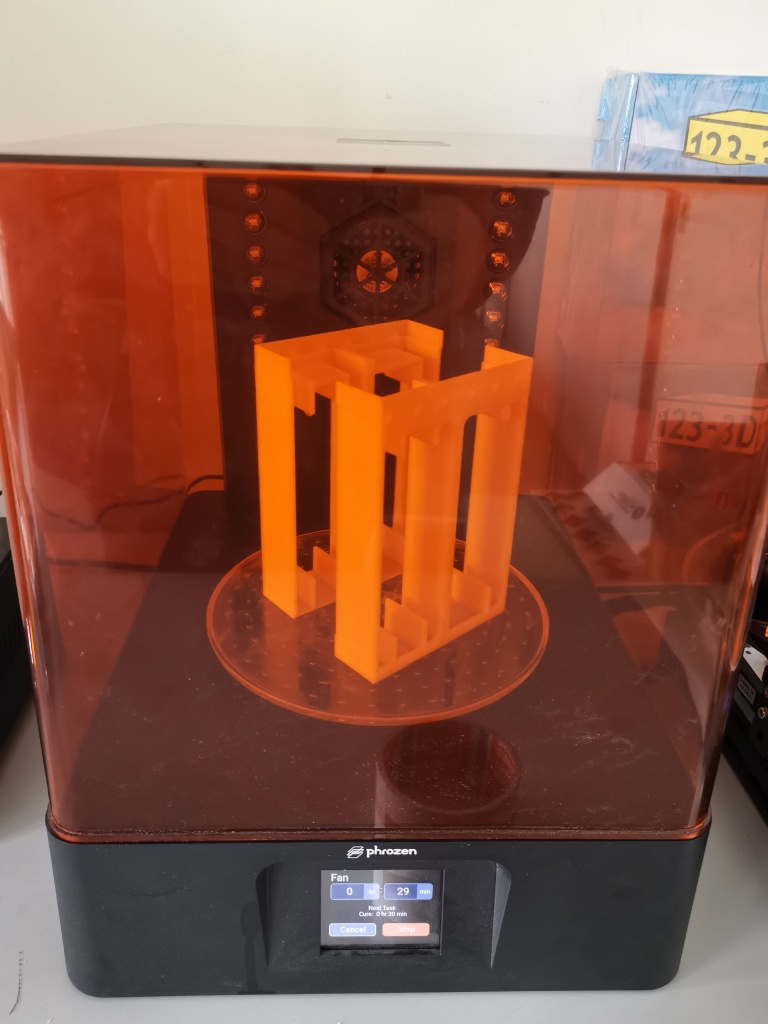
The team utilized the Phrozen Sonic Mega 8K 3D printer along with TR300 resin, known for its high-temperature resistance of up to 160°C, to print a rigid, heat-resistant mold. This high-performance resin allowed them to produce a mold that met the precise specifications needed for carbon fiber production without relying on costly, traditional manufacturing methods. The TR300 resin’s smooth surface finish minimized the need for additional polishing, speeding up the entire process.
Results
- Cost Efficiency. 3D printing the mold in-house with TR300 resin significantly reduced expenses compared to outsourced methods, eliminating minimum order costs and vendor markups.
- Precision. The smooth surface of the 3D-printed mold minimized post-production work, allowing for a quicker, more streamlined manufacturing process.
- Enhanced Performance. The high-temperature resistance of TR300 resin ensured that the mold could handle the demands of carbon fiber injection molding, producing reliable and high-quality parts for the steering system.
By switching to in-house 3D-printed molds with TR300 resin, the Innoptus Solar Team could create precise, high-performance carbon fiber components more efficiently, helping them maintain control and flexibility over their manufacturing process.
Challenge #5: Scale Model of the Prototype Car
Testing a solar car’s aerodynamics in a wind tunnel is essential, yet costly, and not every institution has access to a full-size wind tunnel. Even when available, the size of these facilities may not accommodate a full-scale vehicle, making precise scale models crucial for accurate testing.
For the Innoptus Solar Team, this testing process involved two phases: first, using a smaller scale model to visualize airflow and perform initial wind tunnel tests, and then transitioning to a larger scale model to capture more detailed aerodynamic insights. While computer simulations provided useful preliminary data, they couldn’t replace the accuracy of real-world wind tunnel tests.
Solution with 3D Printing
Using the Phrozen Sonic Mega 8K 3D printer and Protowhite resin, the team produced highly detailed scale models that were accurate enough for effective wind tunnel testing. In the first phase, a smaller model allowed the team to analyze airflow and observe potential aerodynamic challenges. In the second phase, a larger scale model provided more comprehensive testing data, validating the car’s design under controlled wind conditions.
Results
- Pre-testing. The scale models enabled the team to run multiple rounds of wind tunnel tests, offering insights into aerodynamic properties that digital simulations alone could not fully replicate.
- Design Validation. The precision of the 3D-printed models allowed the team to better predict the aerodynamic performance of the full-size vehicle, ensuring that the design would perform reliably under real-world conditions.
By creating detailed scale models with 3D printing, the Innoptus Solar Team maximized their wind tunnel testing capabilities, enabling more informed design refinements and ultimately improving the car’s aerodynamic efficiency.
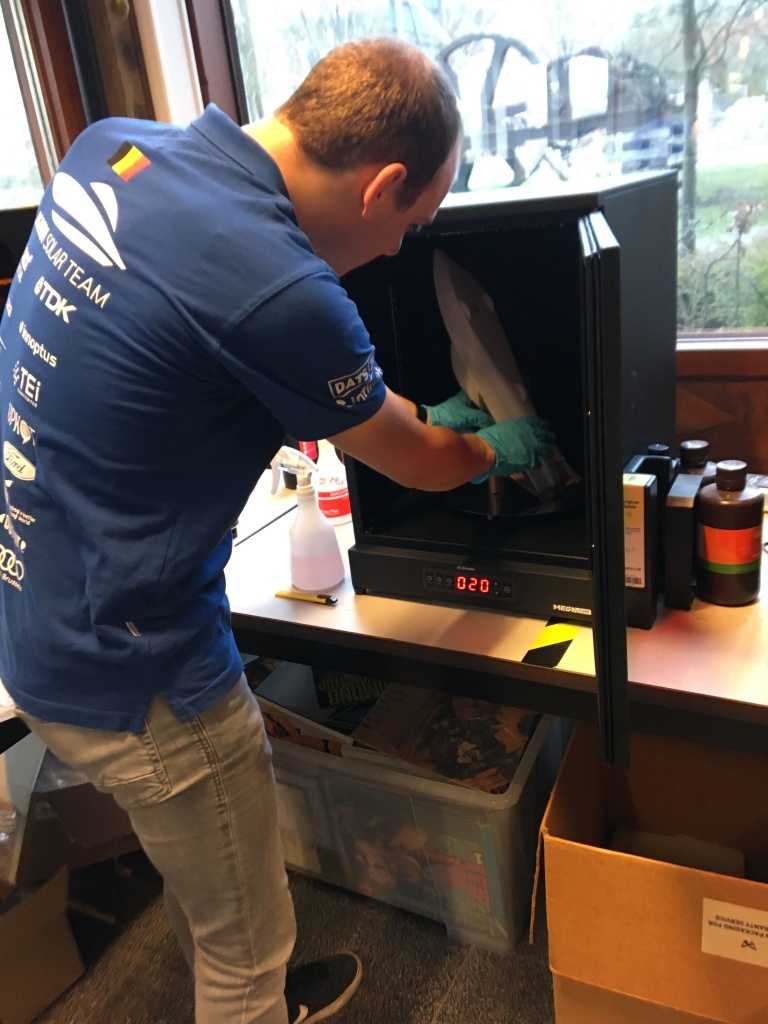
Challenge #6: Wind Tunnel Testing
The final wind tunnel test required the production of precise fins to accurately measure the car’s aerodynamics. Previously, manufacturing such components took weeks, but the team needed quicker results.
Solution with 3D Printing
Using the Mega 8K printer and Protowhite resin, the team quickly produced multiple fins for testing in the wind tunnel. This enabled them to run several iterations of the test, optimizing the car’s performance in high wind conditions.
Results
- Cost & Time Efficiency. Producing the fins through 3D printing was faster and more cost-effective compared to traditional manufacturing methods.
- Performance Optimization. The team was able to run additional tests and make quick adjustments, leading to better aerodynamic performance.
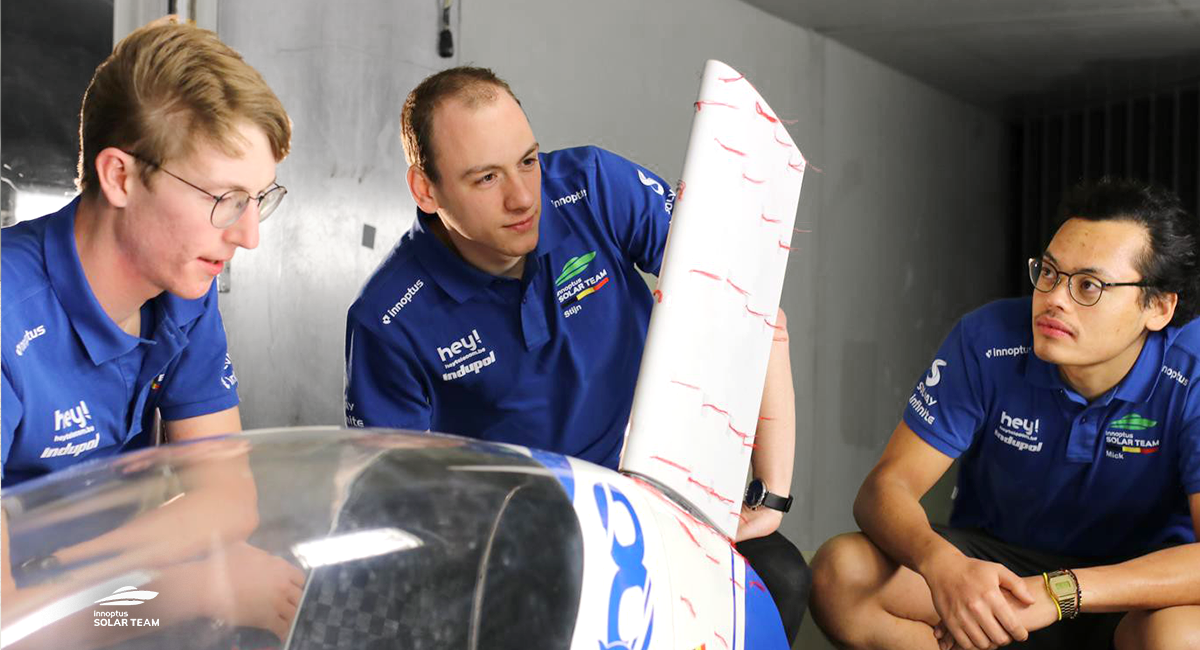
Challenge #7: Fuse Holder
The Innoptus Solar Team required a custom-built fuse holder for the vehicle’s battery system, a critical component that needed to be both heat-resistant and reliable to prevent any risk of overheating or fire. Unlike other components designed for prototyping and iterative testing, the fuse holder was intended as an end-use part, ready for immediate integration into the vehicle.
Solution with 3D Printing
Leveraging the Phrozen Sonic Mega 8K 3D printer and TR300 resin, the team produced a durable fuse holder capable of withstanding high temperatures, meeting strict safety standards. The TR300 resin’s high-temperature resistance made it ideal for this application, allowing the team to print a functional, end-use component directly without additional manufacturing steps. Additionally, 3D printing provided the flexibility to quickly adapt the design if needed based on performance testing.
Results
- Safety Compliance. The temperature-resistant properties of the TR300 resin ensured that the fuse holder met all necessary safety requirements, safeguarding the car’s electrical system.
- Direct Application. As an end-use part, the 3D-printed fuse holder was ready for immediate installation, bypassing the need for further processing or third-party manufacturing.
- Customization. 3D printing enabled easy design adjustments, ensuring the component’s performance was tailored to the vehicle’s exact requirements.
By 3D printing the fuse holder, the Innoptus Solar Team gained a robust, high-performance part that could be implemented instantly, saving time and resources while maintaining high safety standards crucial for their race vehicle’s integrity.
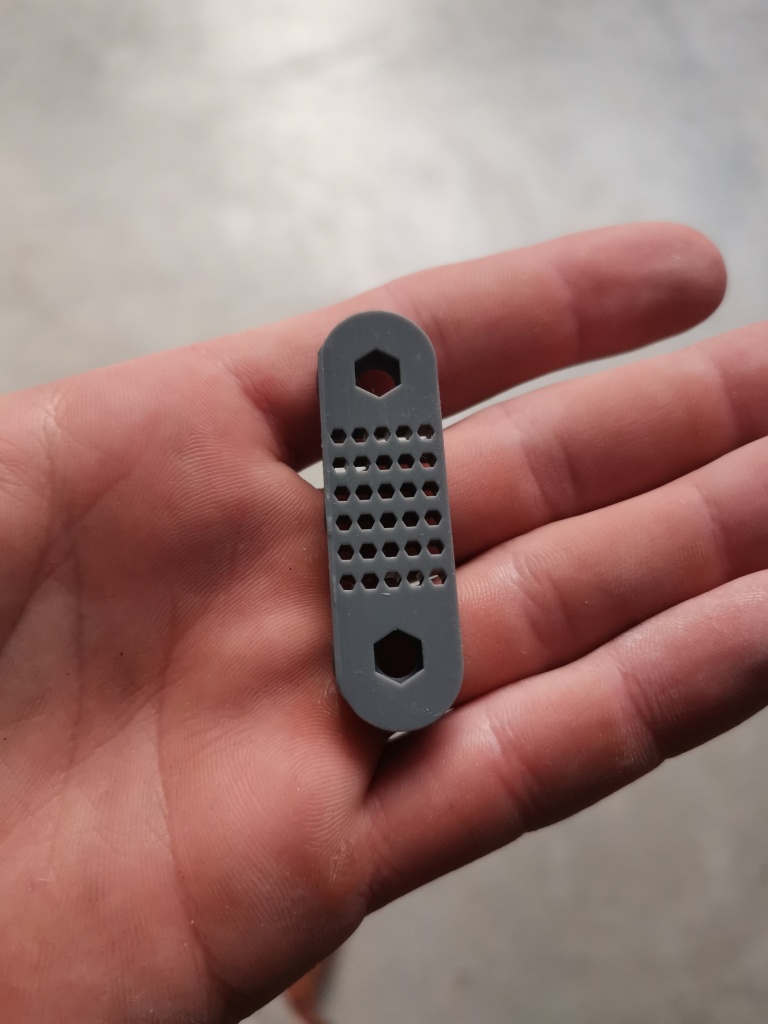
Behind-the-Scenes
In their behind-the-scenes process, the Innoptus Solar Team shared that without 3D printing, they would have struggled to complete their car to the high standard they had envisioned. Other teams in the competition were still assembling their vehicles at the last minute, but Innoptus, having completed all testing and assembly ahead of time, remained confident, relaxed, and able to assist other teams who needed help.
This confidence allowed them to focus on optimizing their solar vehicle’s performance, contributing to their impressive win.

Final Outcome
“Phrozen's 3D printing solutions have significantly streamlined our workflow, giving us more time to refine our designs to enhance the performance of our cars.”
- Martijn Camps, Aerodynamic Engineer at Innoptus Solar Team
The Innoptus Solar Team's use of 3D printing played a pivotal role in their success at the 2023 World Solar Challenge. The ability to rapidly prototype, test, and iterate on key vehicle components—such as the wheel fearing, rotating fin system, and battery cell casing—allowed the team to stay ahead of schedule and outperform their competitors.

Key Benefits of 3D Printing for the Innoptus Solar Team
Faster Turnaround Time. 3D printing reduced the time needed to test and produce components from weeks to days, allowing for more rapid innovation.
Precision & Accuracy. The high precision of resin printing gave the team confidence in the reliability and performance of each part.
Cost Efficiency. Traditional manufacturing methods for custom parts can be costly and time-consuming, but 3D printing provides an affordable and agile alternative.
Flexibility. The ability to modify designs and run multiple iterations quickly allowed the team to perfect their vehicle’s functionality and aerodynamics.
Looking Ahead: The Future of 3D Printing in Solar Racing
The success of the Innoptus Solar Team highlights the growing role of 3D printing in competitive automotive design, especially in high-stakes environments like solar-powered racing. Moving forward, the team plans to continue leveraging 3D printing for prototyping and testing, refining their use of this technology in more advanced applications. By integrating 3D printing into their design process, they ensure that future iterations of their solar vehicles will be even more efficient, reliable, and innovative.
As 3D printing technology continues to evolve, its impact on solar racing—and automotive design in general—is likely to grow. The Innoptus Solar Team’s experience demonstrates how this technology can accelerate the innovation cycle and give teams a competitive advantage in challenging, cutting-edge environments.
Conclusion
The Innoptus Solar Team’s victory in the 2023 World Solar Challenge is a testament to the power of combining innovative design techniques with cutting-edge technologies like 3D printing. By leveraging rapid prototyping and the ability to iterate quickly, they were able to create a vehicle that not only performed exceptionally but also set them apart from the competition.
For businesses and teams looking to optimize their own product development processes, 3D printing offers a host of advantages—speed, precision, flexibility, and cost savings—that can significantly streamline production and testing cycles.
If you're interested in learning more about how 3D printing can revolutionize your industry, contact us today to explore custom solutions and see how 3D printing can elevate your next project.